
7 Common Gas Detection Mistakes That Lead to Confined Space Accidents
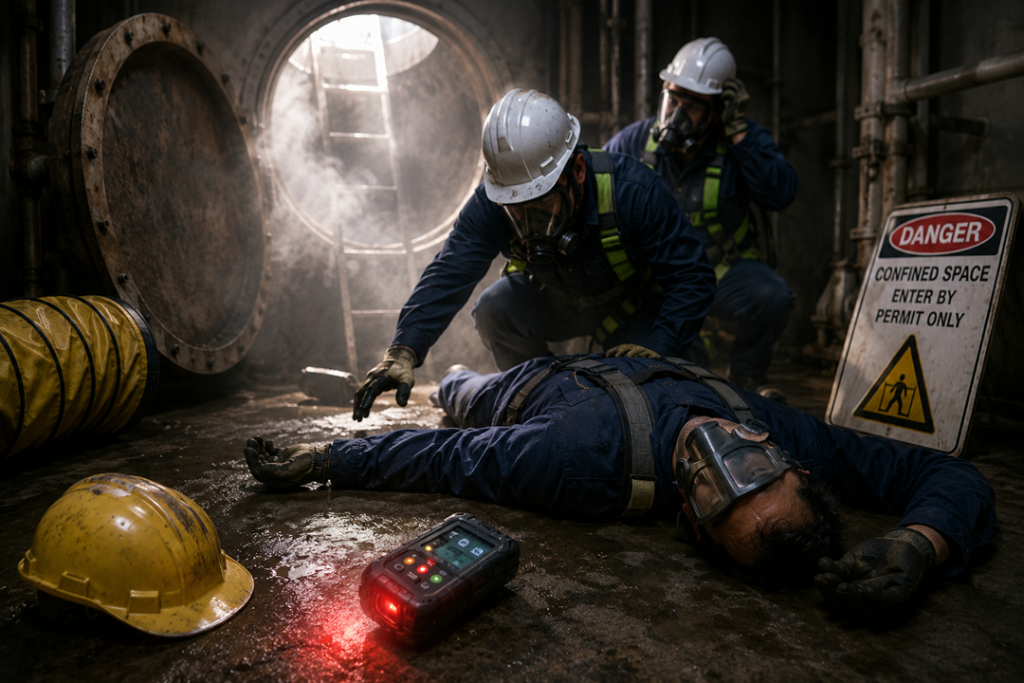
Confined space accidents often happen without warning. Hazardous gases cannot be seen, and in many cases they cannot be smelled. A space that appears safe may contain oxygen-deficient air, toxic gases, or combustible vapours that can seriously injure or kill workers within minutes.
A portable 5-gas detector is one of the most important safety tools for confined space entry. However, even the best equipment cannot protect workers if it is used incorrectly. Understanding the most common gas detection mistakes can help prevent accidents and improve workplace safety.
- Entering Without Testing the Atmosphere
One of the most dangerous mistakes is assuming that a confined space is safe simply because it has been entered before or appears normal.
Atmospheric conditions can change due to:
- Chemical reactions
- Rusting or corrosion
- Cargo residues
- Poor ventilation
- Leaking gases
- Nearby industrial processes
Always test the atmosphere before anyone enters the confined space, regardless of previous inspections.
- Skipping the Bump Test
A gas detector should be bump tested before use to verify that the sensors and alarms respond correctly to known test gases.
Skipping this simple check could result in:
- Faulty sensor readings
- Non-functioning alarms
- False confidence during entry
A bump test only takes a few minutes but can confirm that the detector is operating as intended.
- Using an Uncalibrated Gas Detector
Over time, gas sensors naturally drift and may lose accuracy. Without regular calibration, readings may no longer reflect the actual atmospheric conditions.
Routine calibration helps ensure that the detector provides reliable measurements and maintains the performance specified by the manufacturer.
Maintaining calibration records also supports safety management and equipment maintenance programmes.
- Testing Only at the Entrance
Hazardous gases are rarely distributed evenly inside a confined space.
Some gases are heavier than air and settle near the bottom, while others are lighter and accumulate near the top. Temperature, ventilation, and the shape of the space can also create pockets of hazardous gas.
Best practice is to sample the atmosphere at multiple levels—top, middle, and bottom—before entry and whenever conditions may change.
- Ignoring Gas Detector Alarms
Gas detector alarms are designed to provide immediate warning of unsafe atmospheric conditions.
Workers should never ignore or silence an alarm without first determining the cause.
If the detector alarms:
- Stop work immediately.
- Exit the confined space if necessary.
- Investigate the source of the hazard.
- Ventilate the area if appropriate.
- Re-test before re-entry.
Ignoring an alarm can expose personnel to unnecessary risks.
- Relying on Smell or Personal Experience
Some hazardous gases have no smell, while others can quickly overwhelm the human sense of smell.
For example:
- Carbon monoxide has no colour, taste, or odour.
- Oxygen deficiency cannot be detected by human senses.
- Hydrogen sulfide may initially smell like rotten eggs, but higher concentrations rapidly impair the ability to detect its odour.
A calibrated gas detector is far more reliable than personal judgement.
- Forgetting Continuous Monitoring
Atmospheric conditions inside a confined space may change after work has started.
Activities such as:
- Welding
- Cleaning
- Chemical processing
- Product transfer
- Ventilation changes
can alter gas concentrations during the job.
Continuous or periodic monitoring helps detect changing conditions and provides additional protection for personnel working inside confined spaces.
Best Practices for Safe Gas Detection
A comprehensive confined space safety programme should include:
- Atmospheric testing before entry
- Routine bump testing
- Scheduled calibration
- Proper worker training
- Continuous monitoring when required
- Regular inspection and maintenance of gas detectors
- Clear emergency response procedures
Gas detection is only one part of confined space safety, but it is one of the most important.
Improve Safety with a Reliable 5-Gas Detector
A dependable 5-gas detector provides simultaneous monitoring of oxygen, combustible gases, carbon monoxide, hydrogen sulfide, and carbon dioxide, allowing workers to identify hazardous conditions before entering confined spaces.
The Sea Hover K-600M 5-in-1 Gas Detector is designed to support atmospheric testing in marine, offshore, manufacturing, utilities, and industrial environments. Combined with proper training, regular calibration, and established safe work procedures, it helps organisations improve confined space safety and reduce the risk of preventable accidents.
Conclusion
Most confined space accidents are preventable. By avoiding common gas detection mistakes and following recognised safety procedures, organisations can significantly reduce workplace risks.
Testing the atmosphere, maintaining gas detection equipment, and responding appropriately to alarms all contribute to safer operations and better protection for workers entering confined spaces.
Key Takeaways
- Never enter a confined space without atmospheric testing.
- Perform a bump test before using the gas detector.
- Keep the detector properly calibrated.
- Sample the atmosphere at multiple levels, not just at the entrance.
- Treat every gas detector alarm seriously.
- Never rely on smell or experience to identify hazardous gases.
- Monitor the atmosphere continuously whenever conditions may change.