

Thermal + Acoustic Imaging: A Smarter Approach to Condition-Based Maintenance
Industrial equipment rarely fails without warning. Some problems generate excess heat, while others produce abnormal sound. Relying on a single inspection method may cause maintenance teams to miss critical issues.
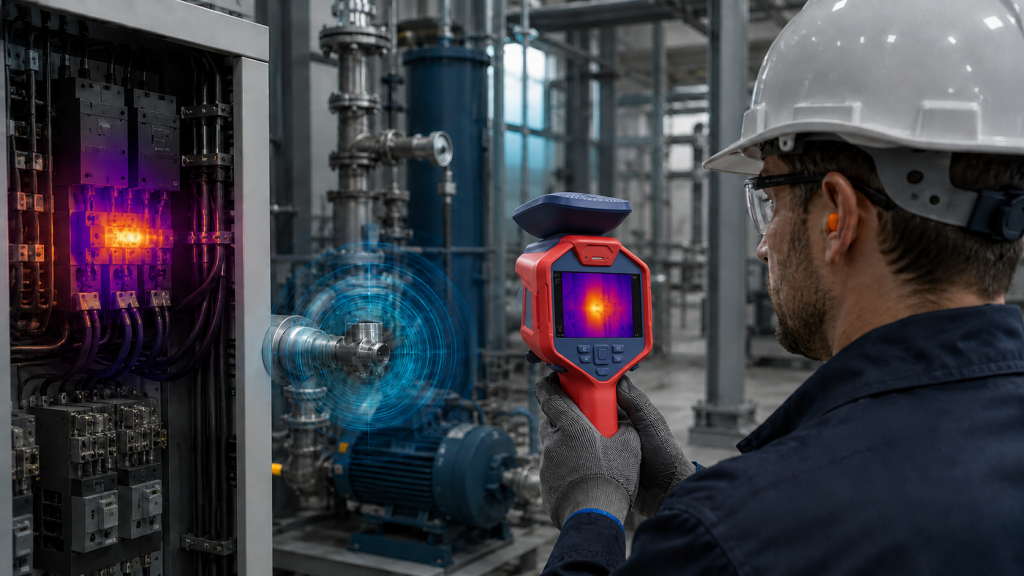
By combining thermal imaging and acoustic imaging, maintenance teams gain a more complete understanding of equipment condition, enabling earlier fault detection, improved reliability, and reduced unplanned downtime.
What Is Condition-Based Maintenance (CBM)?
Condition-Based Maintenance is a strategy that uses actual equipment condition to determine when maintenance is needed. Instead of servicing assets solely on a fixed schedule, technicians monitor indicators such as:
- Temperature
- Sound
- Vibration
- Electrical performance
- Pressure and flow
- Visual equipment condition
The goal is simple: identify developing problems before they become failures.
Why Thermal and Acoustic Imaging Work Better Together
Different failure modes create different symptoms.
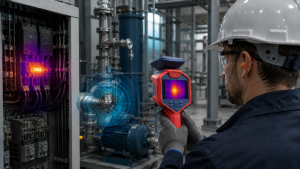
Thermal Imaging Detects Heat-Related Issues
Thermal cameras visualize temperature differences and help identify:
- Electrical hotspots in switchboards and panels
- Loose or high-resistance connections
- Overheating motors and pumps
- Bearing temperature anomalies
- Cooling system failures
- Process temperature irregularities
A thermal hotspot often provides an early indication that a component requires further investigation.
Acoustic Imaging Detects Sound-Related Issues
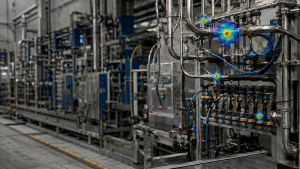
Acoustic cameras visualize the source of sound and are particularly effective for:
- Compressed air leak detection
- Pressurized gas leak localization
- Vacuum leak inspection
- Pneumatic equipment troubleshooting
- Abnormal mechanical noise identification
- Certain partial discharge applications
Instead of searching manually, technicians can quickly pinpoint the exact location of a leak or abnormal sound source.
Thermal Imaging vs Acoustic Imaging
Application | Thermal Imaging | Acoustic Imaging |
Electrical hotspots | ✓ | – |
Overheating motors | ✓ | – |
Bearing temperature anomalies | ✓ | Complementary |
Cooling problems | ✓ | – |
Compressed-air leaks | – | ✓ |
Gas leak localization | – | ✓ |
Vacuum leaks | – | ✓ |
Abnormal sound sources | – | ✓ |
The question is not which technology is better, but rather:
“What symptom does this failure mode produce: heat or sound?”
Real-World Example
A typical maintenance route may include:
- Electrical rooms: Thermal inspection of switchboards and electrical connections
- Motor areas: Monitoring motors, bearings, and drives for abnormal temperatures
- Production lines: Acoustic surveys for pneumatic leaks
- Utility systems: Acoustic inspection of compressed-air distribution networks
By combining both technologies, maintenance teams can inspect more assets with greater confidence.
A Practical CBM Workflow
An effective condition-monitoring process follows five key steps:
- Identify critical equipment
- Select the right inspection technology
- Detect and document abnormalities
- Investigate root causes
- Repair, verify, and trend results
Thermal and acoustic images provide clear visual evidence that helps maintenance teams prioritize repairs, validate corrective actions, and build historical condition records.
Where Thermal + Acoustic Imaging Adds Value
Combined inspection technologies are particularly valuable in:
- Manufacturing facilities
- Food & beverage plants
- Electronics and semiconductor production
- Utilities and power systems
- Oil & gas facilities
- Commercial and industrial buildings
These environments often contain both electrical infrastructure and compressed-air systems, making dual-technology inspections highly effective.
The Future of Maintenance Is Multi-Sensor
No single sensor can detect every failure mode. A modern maintenance program combines multiple technologies, including thermal imaging, acoustic imaging, vibration analysis, and electrical testing.
By monitoring both heat and sound, maintenance teams gain broader condition visibility, helping them:
- Detect issues earlier
- Reduce unexpected downtime
- Improve maintenance planning
- Lower energy losses from compressed-air leaks
- Increase asset reliability
Conclusion
Condition-Based Maintenance is most effective when decisions are based on accurate condition data. Thermal imaging reveals temperature anomalies, while acoustic imaging identifies leaks and sound-related faults.
Together, they provide a more complete picture of asset health, allowing maintenance teams to see more, investigate earlier, and maintain equipment based on actual condition rather than assumptions.
For facilities responsible for electrical, mechanical, and pneumatic assets, combining thermal and acoustic imaging is a practical and efficient approach to modern predictive maintenance.
Looking for Thermal + Acoustic Imaging Solutions?
Atlantis Technologies provides FOTRIC thermal and acoustic imaging solutions in Singapore for condition-based maintenance, predictive maintenance, electrical inspection, compressed-air leak detection and industrial condition monitoring.
Whether your maintenance programme requires thermal imaging for electrical and mechanical assets, acoustic imaging for compressed-air and gas leak detection, or an integrated thermal + acoustic approach, selecting the right solution depends on your equipment, failure modes and inspection workflow.
Our team can help evaluate your application and identify an appropriate FOTRIC inspection solution.
Explore our FOTRIC Thermal & Acoustic Camera solutions or contact Atlantis Technologies at sales@atlantistech.com.sg to discuss your condition-based maintenance requirements.